Here’s a workplace conversation that’s happening in more offices every year: “Can we please get a better coffee machine?” It used to be treated as a minor perk request. Now, as companies compete for talent and invest heavily in making the office a place people actually want to be, the coffee machine has quietly become one of the most visible signals of how an organization treats its people. And the gap between a tired drip machine and a quality automatic espresso setup is one of the most impactful workplace upgrades available per dollar spent.
Let’s start with the practical stuff, because office espresso machines face challenges that home machines don’t. Volume is the big one. A super-automatic designed for a household of four people living its best life in a domestic kitchen will be completely overwhelmed by twenty-five office workers converging on the kitchen between 8:30 and 9:15 every morning. For medium to large offices, you need a machine that’s been engineered for institutional use — with larger hoppers and water tanks (or direct plumbing), faster brew-to-brew cycle times, and internal components rated for hundreds of drinks a day rather than dozens.
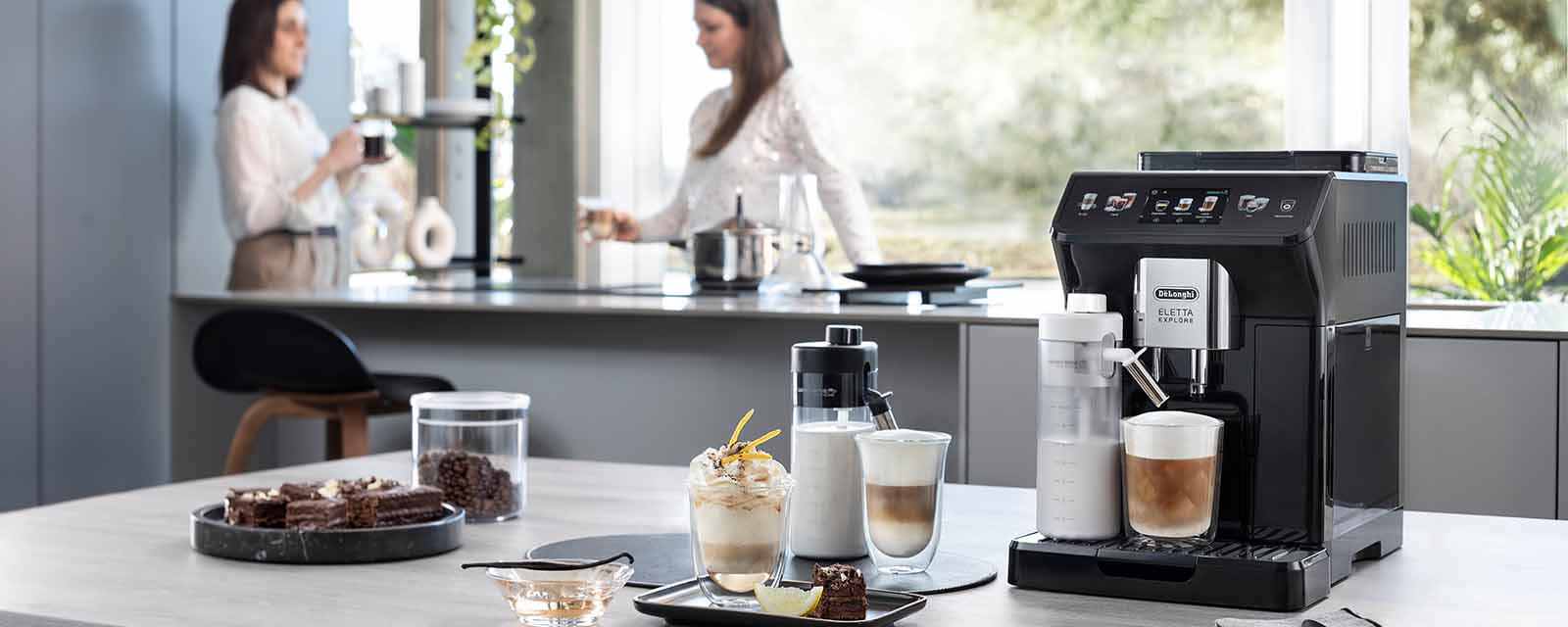
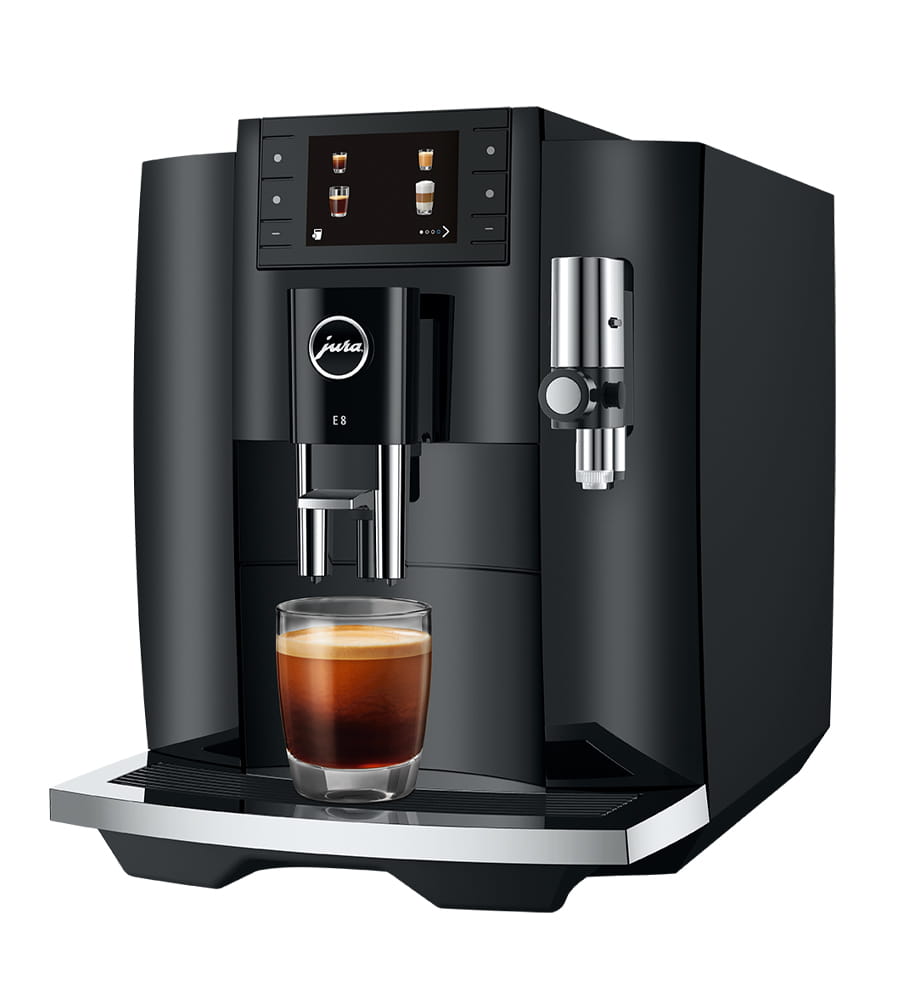
Manufacturers like Jura, DeLonghi, Franke, WMF, and Miele all make office-specific ranges that are built for this reality. If you’re running a small office of up to ten people, a quality domestic super-automatic can handle the load. Larger than that, and investing in a commercial-grade or office-category machine is genuinely worth it — deploying an under-specced machine in a busy office is how you end up with a broken machine and a very unhappy team.
Speed matters in a way that’s easy to underestimate until your office kitchen has a queue. Nobody wants to stand waiting three minutes for the machine to cycle between drinks when they have a meeting starting. Look for machines with fast warm-up times and quick brew-to-brew recovery. Machines with dual brewing groups — capable of handling two drinks simultaneously — are worth considering for larger teams.
Simplicity of use is crucial in a shared environment in a way that doesn’t apply at home. At home, one person learns their machine’s quirks and develops a relationship with it. In an office, the machine needs to be operable on the first attempt by anyone from the CEO to the newest intern. Big, clear touch-screen interfaces with obvious icons, simple drink selection, and guided cleaning prompts are non-negotiable for office deployment.
Maintenance accountability is the trickiest office challenge. At home, you feel the consequences of skipping cleaning directly in your cup. In an office, diffuse responsibility leads to systematic neglect — everyone assumes someone else is handling it. Machines with prominent, hard-to-ignore maintenance indicators that alert all users, and cleaning procedures simple enough for anyone to follow, survive office environments much better than those that require specialist knowledge or bury maintenance prompts in menus.
The business case for upgrading has never been stronger. With hybrid working meaning fewer days in the office for many employees, the in-office experience needs to genuinely reward the commute. Quality coffee is a benefit that people use every day, talk about positively, and genuinely value — surveys consistently show this. The cost per cup of bean-to-cup automatic espresso is a fraction of nearby coffee shop prices, and the time saved by keeping the coffee queue in-house has measurable productivity value. It’s one of the highest-ROI workplace improvements available, and it’s sitting in your kitchen doing its thing every morning.